
Table of contents
If you are struggling with the aftermath of a traumatic event, you may feel as though your perspective on the world has shifted forever. At Online Psychiatrists, Dr. Zlatin Ivanov provides Cognitive Processing Therapy (CPT), a leading, evidence-based treatment designed to help you regain control, challenge "stuck points," and find a path toward healing.
What Is Cognitive Processing Therapy (CPT)?
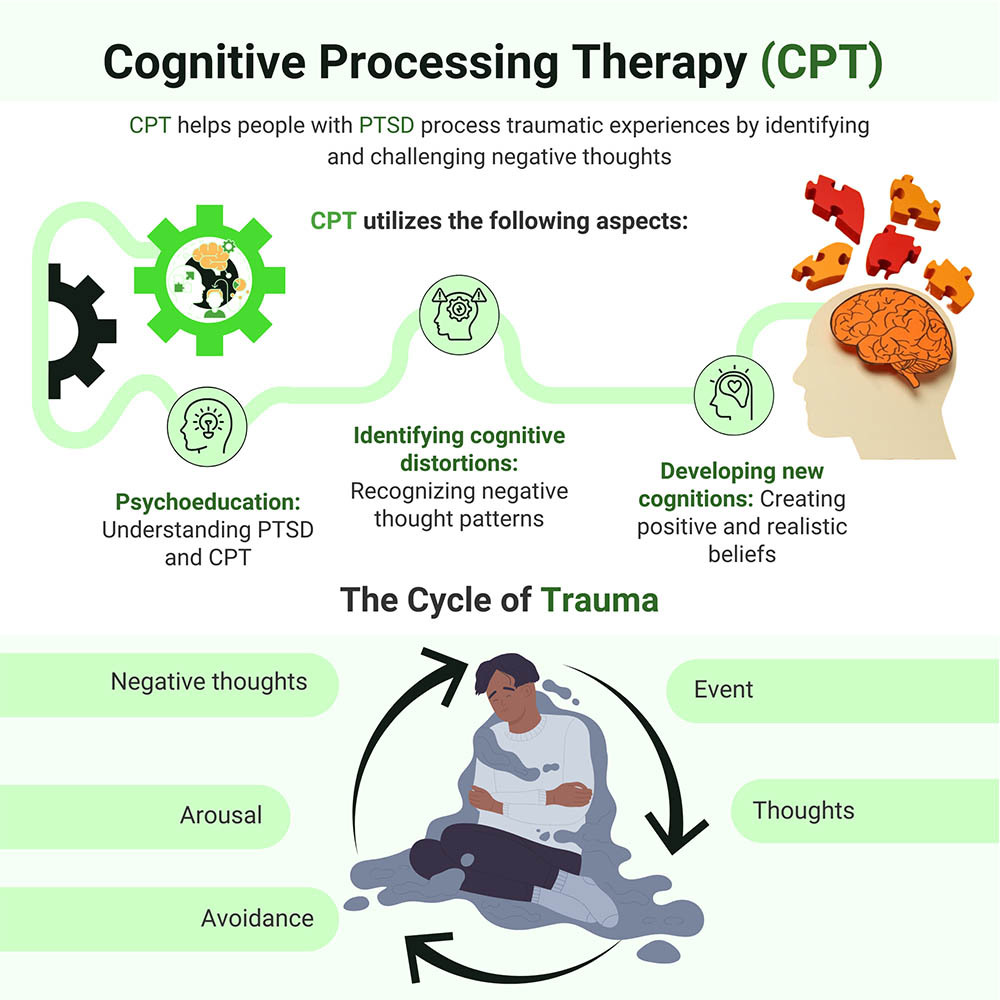
Cognitive Processing Therapy (CPT) is a specific type of Cognitive Behavioral Therapy (CBT) developed specifically to treat Post-Traumatic Stress Disorder (PTSD) and trauma-related symptoms.
After a trauma, it is common to develop new beliefs about why the event happened or how dangerous the world is. These thoughts, also known as "stuck points", can keep you trapped in a cycle of fear, guilt, or hypervigilance.
CPT provides a structured way to evaluate these thoughts and replace them with more balanced, helpful perspectives.
How Does Cognitive Processing Therapy Work?
CPT works by helping you recognize the connection between your thoughts, feelings, and behaviors. The therapy is generally divided into four main parts:
- Education: Learning about PTSD symptoms and how trauma affects the brain.
- Awareness: Identifying your "stuck points", the specific thoughts that are preventing your recovery (e.g., "It was my fault" or "I can never trust anyone again").
- Challenging Beliefs: Using logic and evidence to determine if your trauma-related thoughts are facts or interpretations.
- Integration: Applying your new perspective to five key areas of your life: safety, trust, power/control, esteem, and intimacy.
How Can CPT Help Treat PTSD?
PTSD often occurs because the brain has "over-accommodated" a trauma. For example, if someone experienced an assault, they might believe everyone is dangerous. This belief is an attempt to stay safe, but it makes living a normal life nearly impossible.
CPT helps treat PTSD by:
- Reducing Avoidance: By processing the trauma mentally, you no longer feel the need to avoid reminders of the event.
- Modifying Emotions: By changing the thought (e.g., moving from "I am to blame" to "I did my best in an impossible situation"), the crushing weight of guilt or shame begins to lift.
- Restoring Function: As symptoms decrease, patients find it easier to return to work, sustain relationships, and enjoy hobbies.
What Are The Benefits of Cognitive Processing Therapy?
- No Mandatory Detailed Narrative: Unlike some trauma therapies, CPT does not always require you to write or speak about the trauma in graphic detail if you are not ready.
- Short-Term Commitment: It is a structured, 12-session program rather than years of open-ended talk therapy.
- Life-Long Skills: You learn a "toolkit" of cognitive skills that you can apply to any stressful situation for the rest of your life.
- Improved Relationships: By addressing themes like trust and intimacy, CPT helps repair the social connections that trauma often damages.
About Online Cognitive Processing Therapy (CPT) Sessions
In-person appointment vs virtual session
At Online Psychiatrists, we offer both in-person and virtual CPT. In-person sessions take place in our comfortable, private Manhattan offices. Virtual sessions allow you to receive the same high-level care from the safety and privacy of your own home, which many trauma survivors find particularly helpful during the early stages of treatment.
What an Online Cognitive Processing Therapy Session is Like
An online session mirrors an in-office visit. You will meet with your therapist via a secure, HIPAA-compliant video platform. Each 50-minute session involves reviewing your "practice assignments" (homework), discussing specific stuck points, and learning new ways to challenge your thinking.
Effectiveness of online CPT appointments
Research published in journals such as The Lancet and studies conducted by the VA have proven that CPT delivered via telehealth is equally effective as face-to-face therapy. Patients report high levels of satisfaction and appreciate the reduced stress of not having to commute.
In-person Cognitive Processing Therapy in NYC
For those who prefer a traditional office setting, we offer in-person CPT in New York City. Our practitioners understand the unique stresses of living in NYC and provide a calm, supportive environment for your recovery journey.
Contact us
Cognitive Processing Therapy (CPT) vs Cognitive Behavioral Therapy (CBT)
While CPT is a form of CBT, they are not the same:
- CBT is a broad umbrella used for many conditions, such as anxiety and depression. It focuses on general thought patterns.
- CPT is a specialized "deep dive" into trauma. It specifically targets the "why" and "how" of the trauma and focuses on the five themes of safety, trust, power, esteem, and intimacy.
FAQ's
Is cognitive processing therapy evidence-based?
Yes. CPT is one of the most rigorously researched mental health treatments in the world. It is officially recommended as a "Gold Standard" treatment by the APA, the International Society for Traumatic Stress Studies (ISTSS), and the VA.
Who developed cognitive processing therapy?
CPT was developed in the late 1980s by Dr. Patricia Resick. It was initially created to treat survivors of sexual assault and was later expanded to veterans and survivors of all types of trauma.
What are the 5 themes of cognitive processing therapy?
CPT focuses on how trauma disrupts these five areas:
- Safety: Beliefs about your ability to protect yourself and others.
- Trust: Beliefs about whether you can rely on yourself or others.
- Power and Control: Feelings of helplessness or the need for total control.
- Esteem: How you view your worth and the worth of others.
- Intimacy: Your ability to feel close to others.
Who should not do cognitive processing therapy?
CPT is highly effective for most, but it may not be suitable for individuals currently experiencing active psychosis, immediate suicidal crisis, or those with significant cognitive impairments that prevent the completion of practice assignments. It is also recommended that patients be in a stable living environment before beginning.
How long does cognitive processing therapy (CPT) last?
The standard protocol is 12 sessions, typically held once or twice a week. Each session lasts approximately 50 minutes.
How to Find CPT Therapy in NYC?
Finding a qualified cognitive processing therapist in New York City can feel overwhelming. When looking for CPT, ensure your provider is specifically trained in the CPT protocol. Dr. Zlatin Ivanov specializes in trauma-informed care and evidence-based protocols.
Fast Facts About Cognitive Processing Therapy
- Gold Standard: CPT is recommended as a first-line treatment for PTSD by the American Psychological Association (APA) and the Veterans Affairs (VA) department.
- High Success Rate: Studies show that approximately 60-70% of people who complete CPT experience a significant reduction in PTSD symptoms.
- Time-Limited: Most patients see transformative results in just 12 sessions.
- Flexible Format: Research confirms that CPT delivered via telehealth is just as effective as in-person sessions.
References:
- American Psychological Association (APA): Clinical Practice Guideline for the Treatment of PTSD in Adults (2017).
- Department of Veterans Affairs (VA) & Department of Defense (DoD): VA/DoD Clinical Practice Guideline for the Management of Posttraumatic Stress Disorder and Acute Stress Disorder (2023).
- Resick, P. A., et al. (2002): "A comparison of cognitive-processing therapy with prolonged exposure and a waiting condition for the treatment of posttraumatic stress disorder in female rape victims." Journal of Consulting and Clinical Psychology.
- Steenkamp, M. M., et al. (2015): "Psychotherapy for Military-Related PTSD: A Review of Randomized Clinical Trials." JAMA. This meta-analysis notes that while outcomes vary, approximately 60-70% of patients who complete these evidence-based treatments see clinically significant improvement.
- Resick, P. A., Monson, C. M., & Chard, K. M. (2016): Cognitive Processing Therapy for PTSD: A Comprehensive Manual.
- Maieritsch, S., et al. (2016): "Telehealth cognitive processing therapy: Outcomes and treatment-relevant topics in a veteran sample." Psychological Services.
Schedule a consultation
Recovery from trauma is possible. You do not have to live with the weight of "stuck points" forever. Whether you choose to see Dr. Zlatin Ivanov in person in NYC or virtually, our goal is to help you process your past so you can reclaim your future.